Disclaimer: This is general advice for static caravan buyers and owners. Some details may not apply to our park, so please check with our team before making any decisions. Images used in this article are AI-generated and for illustrative purposes only.
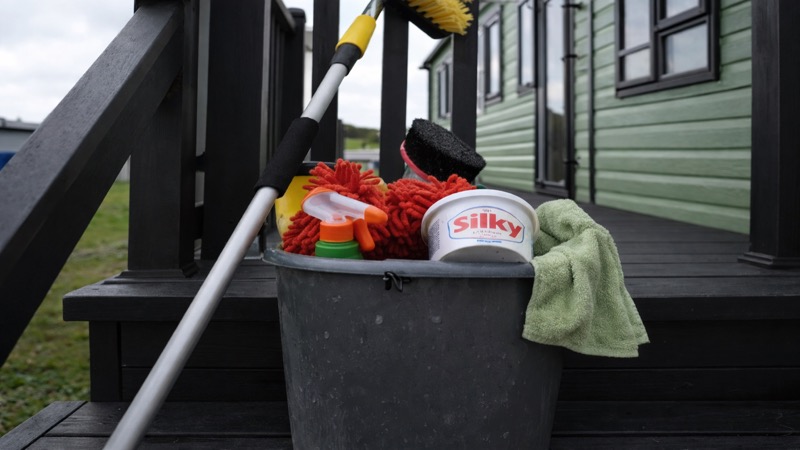
You pull up to your pitch on a Friday evening.
The door opens and everything smells clean.
The windows catch the light.
The decking is spotless.
That is what static caravan care is really about.
Not a list of chores. Not a weekend lost to scrubbing.
Just the quiet satisfaction of arriving somewhere that feels looked after. Because it is.
Most owners we speak to have the same questions rattling around on the drive down.
Am I using the right products?
Could I actually be causing damage without knowing it?
Is there a simple routine that doesn't eat into my weekends?
We've looked after thousands of holiday homes across our 10 parks over more than 60 years.
This guide is everything we've learned about practical static caravan maintenance. What works, what doesn't, and what you can safely skip.
By the time you finish reading, you'll know the exact products to use on every surface, the one mistake most owners make with their windows, and a seasonal rhythm that keeps your holiday home in great condition for a couple of hours each visit.
At a Glance
- Exterior wash: Caravan shampoo, soft brush, garden hose
- Roof and gutters: Telescopic brush from a stepladder — never stand on it
- Windows: Most are acrylic, not glass — needs specialist cleaner
- Damp prevention: Ventilate, moisture traps, stand cushions on end
- Decking: Composite and timber need different care
- Seasonal rhythm: Spring deep clean, summer upkeep, autumn prep, winter close-down
- Upholstery: Air between visits, machine-wash covers where possible
Ads by Salop Caravan Sites
Scroll to continue with content
In this guide
- Giving the Outside a Good Wash
- Cleaning the Roof and Clearing the Gutters
- Looking After Your Windows (and Why Glass Cleaner Could Be a Problem)
- Keeping Things Fresh and Dry Inside
- Looking After Your Decking
- Caring for Cushions and Soft Furnishings
- A Simple Routine Through the Year
- Your Quick-Reference Product List
- Common Questions About Static Caravan Care
Giving the Outside a Good Wash
The short answer: A bucket of caravan shampoo, a long-handled soft brush, and a garden hose are all you need.
Work from the roof downwards, rinse each section before the shampoo dries, and finish with a protective rinse for that showroom shine.
Static caravan cleaning doesn't need to be complicated. Here is the method that works:
- Hose down the whole exterior to loosen dirt, leaves, and cobwebs.
Use a garden hose on a spray or mist setting.
- Mix caravan shampoo in a bucket at the dilution on the bottle.
Fenwicks Caravan Cleaner is the one we hear owners mention the most.
- Wash in sections with a long-handled soft brush.
Start at the top and work down so dirty water doesn't run over clean panels.
- Rinse each section before the shampoo dries. Move quickly on warm days.
- Dry with a flexible silicone blade or a large microfibre cloth.
- Optional finishing step: Add a capful of Fenwicks Bobby Dazzler to five litres of water and sponge it over the panels.
It leaves a protective coating that repels water, dirt, and algae.
Owners who use Bobby Dazzler tend to bring it up unprompted.
It gives a visible, lasting shine without polishing. We've seen the difference on units side by side on the same pitch, and you can always tell which one had the afterwash.
Now the two things that catch people out.
Warning
Never use washing up liquid on your caravan. It can lead to corrosion of the bodywork over time. A bottle of caravan shampoo costs a few pounds and lasts all season.
First: washing up liquid. It seems harmless, but according to UK insurer Lifesure, it can lead to corrosion of caravan bodywork over time.
A bottle of caravan shampoo costs a few pounds and lasts all season. Same effort, none of the damage.
Second: pressure washers.
Fenwicks warn that power washers can harm mastic and rubber seals, causing leaks and long-term damage. The Caravan and Motorhome Club say the same thing. A garden hose does the job properly and protects your seals at the same time.
One more tip: never spray water directly into air vents or extraction vents.
It forces moisture into places it shouldn't go.
For yellowed plastic trim around doors and windows, a melamine sponge (sometimes called a magic sponge) brings it back to white. Don't use one on painted surfaces, though.
An annual polish and wax combats UV dulling on the cladding, especially if your holiday home catches the afternoon sun.
Cleaning the Roof and Clearing the Gutters
The short answer: Clean your roof from a stepladder using a telescopic soft-bristle brush.
Never stand on a static caravan roof. They are not designed to take a person's weight. Clear your gutters at the same time, especially after autumn leaf fall.
Important
Never stand on a static caravan roof. Use a telescopic brush from a sturdy stepladder on level ground instead.
We get asked about caravan roof cleaning more than almost anything else.
The answer is simpler than most owners expect.
You need a telescopic soft-bristle brush, a sturdy stepladder placed on level ground, a garden hose, and a bucket of caravan shampoo.
Divide the roof into sections. Dip the brush, scrub gently, rinse.
Be careful around roof lights, vents, solar panels, and aerials.
A damp microfibre cloth is better for those.
Open the roof lights from inside afterwards and wipe the lip where grime collects.
It's one of those spots nobody thinks about until it's built up into a dark, sticky line that takes twice the effort to shift.
While you're up the stepladder, clear the gutters.
Scoop out leaves and debris.
Run a hose through the downpipes to check they flow freely.
Blocked gutters send water where it shouldn't go. In our parks, we see more damp issues caused by overflowing gutters than by anything else. Autumn is the critical window for gutter clearing.
The mature trees around many of our Shropshire and Mid Wales parks drop a lot of leaves between October and December. One weekend with a stepladder and a pair of gloves saves you a problem you'd rather not deal with in spring.
Thinking about upgrading at Min‑Y‑Don?
Talk to us about our new model offers.
Looking After Your Windows (and Why Glass Cleaner Could Be a Problem)
The short answer: Most static caravan windows are acrylic, not glass.
Standard glass cleaners contain ammonia that etches acrylic, causing irreversible cloudiness.
Use a specialist acrylic cleaner like Fenwicks Windowize or VuPlex instead.
Caravan window cleaning is where the biggest knowledge gap sits.
Picture this. You give the windows a thorough clean with the same spray you use at home.
They look great that afternoon.
A few months later, the glass looks hazy.
You clean again, harder. The haze gets worse.
That's the moment most owners realise something isn't right. And by then, the damage is done.
The problem is that most static caravan windows are acrylic, not glass. Acrylic is lighter and more flexible, which is why manufacturers use it.
But it reacts badly to ammonia.
Products like Windolene and Windex attack the acrylic surface, etching it over time. The cloudiness and fine cracks (called crazing) cannot be buffed out.
The window needs replacing.
Once you know this, the fix is easy.
| Safe for acrylic |
Avoid — damages acrylic |
| Fenwicks Windowize |
Windolene |
| Autoglym Fast Glass |
Windex |
| Care-avan Acrylic Window Cleaner |
Any ammonia-based glass cleaner |
| VuPlex Plastic Protection |
Methylated spirits |
| Mild caravan shampoo and soft cloth |
Acetone or vinegar-based cleaners |
| |
Abrasive pads or paper towels |
Specialist acrylic cleaners cost about the same as regular glass cleaner.
Now you know which to use, your windows stay crystal clear for years rather than months.
Real-world tip
Check your manufacturer's handbook or ask your park team if you're unsure whether your windows are acrylic or glass. Some newer holiday homes have double-glazed glass units.
While you're at the windows, look at the rubber seals.
Wash them with soapy water, dry, then treat with a silicone spray like Thetford Seal Lubricant or Halfords Silicone Lubricant. It keeps the rubber supple and stops it cracking in the sun.
Five minutes, and your seals last years longer. What we tell owners: this is the easiest job on the list, and probably the most cost-effective.
Keeping Things Fresh and Dry Inside
The short answer: Good ventilation is the key to damp prevention.
Open windows when you arrive, use extractor fans when cooking or showering, and leave internal doors ajar between visits.
A few moisture traps placed around windows do the rest.
Why does it smell musty when I've only been away two weeks?
Almost always the same cause. Poor ventilation traps moisture from cooking, showering, and even breathing.
That moisture settles on cold surfaces: windows, corners, the underside of cupboards.
The good news is that a few habits keep it under control entirely.
When you arrive: Open windows at both ends for a couple of hours. Turn the heating on low.
When cooking: Keep lids on pans. Run the extractor fan during and after.
Close bedroom doors so steam doesn't travel.
When showering: Use the bathroom extractor fan.
Leave the door or window open afterwards.
Between visits: Leave internal doors ajar so air circulates. Make sure fixed vents stay open.
Stand cushions on their ends.
Place disposable moisture traps at the spots where condensation gathers, typically around windows.
Heating: Low and steady beats blasting the thermostat.
A consistent temperature reduces condensation far more than a short blast of hot air.
And avoid drying clothes inside the caravan.
A single load of wet laundry puts litres of moisture into the air. More than most owners realise.
Real-world tip
Marie, a holiday home owner for 21 years, recommends placing small disposable dehumidifier boxes at condensation points around windows. "They're usually cheap enough, and they can save your upholstery or curtains from getting damp."
Signs that your ventilation is working well: no musty smell on arrival, dry window sills, and fresh-smelling soft furnishings.
Named products that help: Kontrol Moisture Trap with Krystals refills (six to eight weeks per unit), Kampa Damp Buster, or Seaflo Reusable Dehumidifier Pads (silica gel that dries on a radiator and goes back in). In our experience, the owners who build these habits early are the ones who never have a damp issue. It becomes second nature within a couple of visits.
Looking After Your Decking
The short answer: Composite and timber decking need different care.
Composite is low-maintenance but not no-maintenance.
A brush-and-bucket clean twice a year keeps it looking good.
Timber decking may need periodic re-staining or oiling.
Decking maintenance is one of those jobs that sounds bigger than it is.
Most modern holiday home parks use composite or uPVC decking.
It looks great and needs less work than timber, but it still benefits from a clean twice a year.
Composite and uPVC Decking
Warm soapy water and a soft brush handle the regular clean.
For mould or algae (the dark patches that appear in shaded spots), use a specialist composite deck cleaner like DeckMAX or Washbomb.
After cleaning, a revitaliser like DeckMAX E2 restores the colour and adds a protective layer.
Every spring, our maintenance teams walk the pitches and notice the same pattern: the owners who gave their decking twenty minutes with a brush in autumn are the ones with no algae to deal with in March.
Warning
Never use household bleach on decking. It damages the surface and won't prevent mould from coming back.
Timber Decking
Timber needs a specialist timber deck cleaner (DeckMAX or Ronseal Decking Cleaner work well).
It may need re-staining or oiling every couple of years, depending on exposure.
Do not pressure wash timber decking.
It forces water into the treated wood and encourages rot.
Both types: Sweep loose debris regularly.
Hose down before scrubbing.
Always clean along the direction of the boards.
Check for loose boards or fixings.
Before you leave for an extended period, move metal furniture and barbecues off the decking.
Rust staining on composite or uPVC is very difficult to remove. Silliest thing in the world to get caught on, but we see rust rings on decking boards every single spring. Moving the barbecue and chairs takes two minutes.
Caring for Cushions and Soft Furnishings
The short answer: Musty smells in caravans usually come from cushions and curtains, not the structure itself.
Airing soft furnishings between visits and washing removable covers makes a big difference.
Caravan upholstery cleaning is easier than most owners expect.
Start by checking the labels on your cushion covers.
Many are removable and machine-washable on a delicate cycle.
For non-removable upholstery, a foam spray cleaner (car upholstery products work well) sprayed on and wiped with a damp cloth does the job.
Between visits, stand your cushions on their ends so air circulates underneath.
This single habit makes the biggest difference to how your caravan smells when you open the door. Owners who've been doing it for years say they notice the difference within the first visit.
Mattresses benefit from regular airing too.
A BedAirer mattress underlay stops condensation forming underneath.
Curtains can be dry-cleaned or hung outside on a sunny afternoon to freshen up.
If you're machine-washing covers, add Dettol Laundry Cleanser instead of fabric conditioner.
It kills odour-causing bacteria that build up in damp fabrics.
What we always tell owners is this: if it smells musty, look at the soft furnishings first.
The structure is usually fine.
It's the cushions and curtains that hold the moisture. Sort those, and the whole place smells different.
A Simple Routine Through the Year
The short answer: Split your care into four seasons and static caravan maintenance never feels like a big job.
A thorough spring clean to open the year, light upkeep through summer, a quick autumn check, and a proper close-down for winter.
The owners who tell us their holiday home still looks showroom-fresh after years all say the same thing.
They don't do it all at once. They spread it across the year.
Spring — Opening Up
This is the satisfying one.
Many owners say the spring clean is one of the best weekends of the year. You open up, air out, and the place comes back to life.
- Arrive with your cleaning products, spare batteries, a stepladder, and basic tools
- Walk the exterior: check the roof, walls, windows, seals, and gutters for anything winter left behind
- Open everything and give the whole place a thorough airing
- Turn on the water and check for leaks. Test gas appliances, the boiler, the fridge, and smoke and CO detectors
- Deep clean inside: vacuum, wipe surfaces, wash cushion covers
- Give the outside a full wash and polish
- Silicone spray on all seals, hinges, and locks
Summer — Enjoying
Summer is about light upkeep and enjoying your holiday home.
The hard work is behind you. A few minutes each visit keeps everything ticking along.
- Ventilate daily, especially when cooking or showering
- Close curtains or blinds during peak sun to protect furnishings from fading
- Quick exterior wash when it needs it
- Check for pests and seal any gaps you spot
Autumn — Preparing
One good visit before winter is all it takes.
- Clear the gutters. In our parks across Shropshire and Mid Wales, the autumn leaf fall is heavy
- Give the exterior a full clean and check for any wind damage
- Test the heating system before the cold arrives
- Deep clean inside
- Book any gas or electrical servicing that's due
Winter — Closing Down
Check with your park team about drain-down services. Some parks offer this, while others expect owners to arrange their own.
Your job is the practical close-down. And if you've kept up with the seasonal rhythm, this part is straightforward.
- Remove all perishables. Take home valuables and anything your park requires
- Stand cushions on their ends. Leave all internal doors ajar
- Place moisture traps around windows
- Clean the fridge and wedge the door open so air circulates
- Make sure all fixed vents stay open
- Move metal furniture and barbecues off the decking
- Close and secure all windows, doors, and roof lights
- Leave a key with the park office
Real-world tip
Your park team can remind you of your park's specific season dates and close-down requirements. Nobody minds you checking.
Local Note: Shropshire and Mid Wales
- Higher rainfall than southern England means gutter clearing is more critical here
- Mature deciduous woodland around many parks means more tree sap, bird droppings, and autumn leaf fall
- Inland valleys can trap humidity, so ventilation habits matter more
- Higher-altitude parks get earlier and harder frosts, so winter drain-down is essential
- Your park manager knows the specific weather patterns for your park and can advise on timing
Your Quick-Reference Product List
The short answer: Every product mentioned in this guide, in one place.
All are UK-available from caravan accessory shops, Halfords, or online.
Note
These are the products recommended by leading UK caravan care sources. Your park team may have additional recommendations for your specific model. Always check your manufacturer's handbook for any product restrictions.
Exterior cleaning:
| Product |
What it does |
| Fenwicks Caravan Cleaner |
All-surface wash. Removes black streaks, algae, traffic film |
| Fenwicks Bobby Dazzler |
Protective afterwash coating. Repels water, dirt, algae |
| Fenwicks Black Streak Remover |
Concentrated formula for stubborn black marks |
Windows:
| Product |
What it does |
| Fenwicks Windowize |
Cleans acrylic windows and removes light hazing |
| VuPlex Plastic Protection |
Cleans, restores, and protects acrylic. Anti-static |
| Autoglym Fast Glass |
Safe on both acrylic and glass |
Damp prevention:
| Product |
What it does |
| Kontrol Moisture Trap + Krystals |
Compact moisture absorber. Six to eight weeks per refill |
| Kampa Damp Buster |
Crystal-based moisture absorber |
| Seaflo Reusable Dehumidifier Pads |
Silica gel pads. Dry on a radiator and reuse |
Decking:
| Product |
What it does |
| DeckMAX Deck Cleaner Concentrate |
Eco-friendly. For composite, uPVC, and timber decking |
| DeckMAX E2 PVC Deck Revitaliser |
Restores colour and eliminates fading on uPVC decking |
| Ronseal Decking Cleaner |
For timber decking. Widely available |
Seals:
| Product |
What it does |
| Thetford Seal Lubricant |
Silicone spray for window and door seals |
| Halfords Silicone Lubricant |
Budget alternative for seal protection |
Upholstery:
| Product |
What it does |
| Car upholstery foam spray |
Spray on, wipe with damp cloth. Available at Halfords |
| Dettol Laundry Cleanser |
Kills odour-causing bacteria in machine-washed covers |
Thinking about upgrading at Min‑Y‑Don?
Talk to us about our new model offers.
Common Questions About Static Caravan Care
How often should you clean a static caravan?
A full exterior wash at least twice a year: once at spring opening and once mid-season. Interior deep clean at spring opening, with light cleaning every visit. The seasonal routine above breaks it down.
Can you use washing up liquid on a static caravan?
No. Washing up liquid can lead to corrosion of caravan bodywork over time. Use caravan shampoo instead. It costs a few pounds and one bottle lasts all season.
Can you pressure wash a static caravan?
Not recommended. Pressure washers can damage mastic and rubber seals, causing long-term leaks. A garden hose on a spray setting does the job safely.
What maintenance does a static caravan need?
Regular exterior cleaning, gutter clearing, window and seal care, damp prevention, and decking care. A seasonal routine (spring deep clean, summer upkeep, autumn check, winter close-down) keeps it manageable. Our seasonal section above has the full breakdown.
Does a static caravan need servicing every year?
Most parks require an annual gas safety check as part of your licence agreement, and many insurance policies require one too. Electrical inspections are also often required by parks. Your park team can confirm what's needed and arrange the booking.
How long does a well-maintained static caravan last?
Holiday home maintenance done properly means decades of enjoyment. Well-cared-for holiday homes can last 25 to 35 years on park.
Good static caravan maintenance isn't about spending every weekend with a bucket and brush.
It's a couple of hours each visit. The right products. A simple rhythm through the year.
The owners who've been doing this for years all describe the same thing.
You pull up, open the door, and everything is exactly how you left it.
Clean. Fresh. Yours.
That feeling doesn't happen by accident.
It happens because you gave it a couple of hours when it mattered.
And now you know exactly what to do.
If you're ever unsure about a product or a method, your park manager is always happy to help. They've seen it all and they know what works for your park.
Nobody minds you asking.
Maintenance Questions at Min‑Y‑Don?
Matthew and Natalie can advise on seasonal care, approved products, and anything else to keep your holiday home in top condition. Whether you need help with a specific job or want a routine to follow, they're always happy to help.
Call us on 01766 781217 or get in touch online
Disclaimer: This is general advice for static caravan buyers and owners. Some details may not apply to our park, so please check with our team before making any decisions. Prices, product names, and technical specifications are provided for reference only and may change over time. Images used in this article are AI-generated and for illustrative purposes only.